Inside Interwell: Dr. Carney Taylor on Pioneering the Future of Kidney Care
Interwell Chief Medical Officer Dr. Carney Taylor shares his journey from private practice to leading clinical strategy and his vision for the future of value-based kidney care.
tags
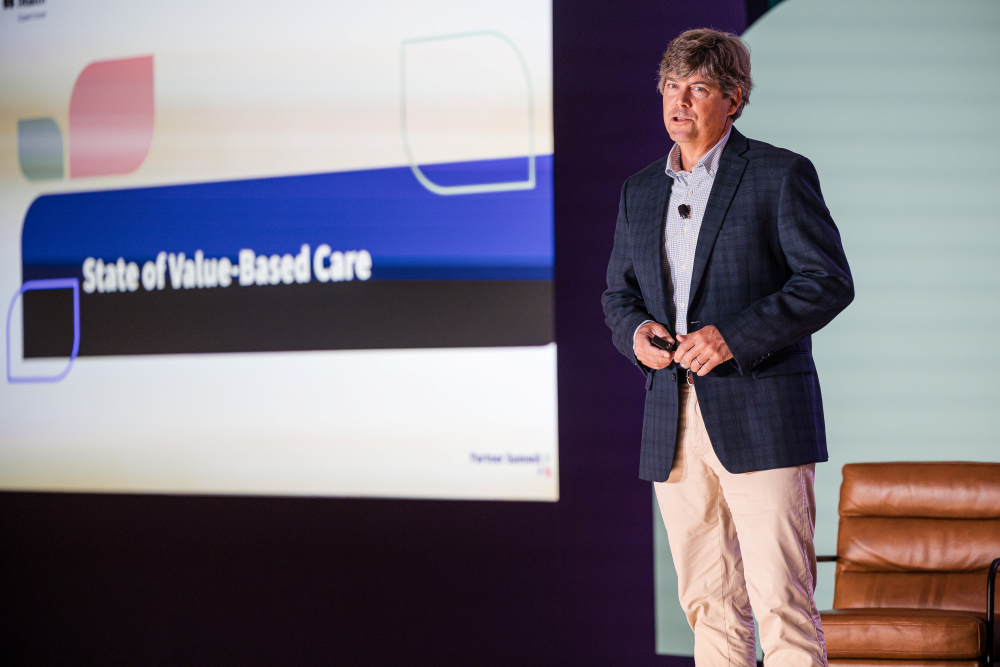
Transforming kidney care requires bold leadership, forward thinking, and a relentless focus on patient outcomes. With a background as a practicing nephrologist and a managing partner of Eastern Nephrology Associates, Carney Taylor, MD, MBA has long been at the forefront of the shift toward value-based care. Now, as Interwell Health chief medical officer, Dr. Taylor is guiding Interwell’s efforts to redefine kidney care through innovation, collaboration, and a steadfast commitment to improving patients’ lives.
Q: What brought you from private practice to a leadership role at Interwell?
CT: It has been an amazing ride, and leaving patient care was a difficult decision. There’s nothing more special than sitting in front of a patient and working with them to solve a problem. However, seeing the resources Interwell has to impact not just one patient, but thousands, was an opportunity I couldn’t pass up.
In my clinical years, I often wrestled with the frustration of trying to get patients from point A to point B successfully. Despite a lot of effort, sometimes they didn’t end up where they deserved to be. I came to the conclusion that there were failures in the system and a lack of resources to support that patient outcome.
When I first heard of Interwell, it took a little while for the concept to sink in. What really captured my attention was how Interwell served as a multiplier, amplifying our ability as physicians to improve patient outcomes. I felt genuine excitement at the idea of becoming one of the pioneering practices in value-based kidney care by partnering with Interwell as an investor practice.
Later, serving on the board allowed me to look behind the curtain and understand the complexity of the business model that we had to get right to ensure the clinical model succeeded. I also saw the incredible team driving Interwell’s mission and I realized the organization’s most incomparable resource is its people. Interwell has a phenomenal team united by a shared focus on the patient outcome as our North Star.
Q: What are your priorities as CMO and head of Interwell’s medical office?
CT: The role of the medical office is to advocate for the programs and solutions that will have the greatest impact on our patients’ health and well-being. Whether it is vetting new features to embed within Acumen, our Epic Connect EHR tailored for nephrology, or influencing development of our own AI applications to optimize clinical workstreams, we have to make sure those solutions fit into the care model, support our providers, and meet our patients’ needs.
I am particularly excited about our new ACE program, which stands for APP coordination of ESKD patients. Using a proprietary Imminent Hospitalization Prediction Model (IHPM), we’ve shown that we can identify patients who are at risk of hospitalization within seven days and divert hospitalization by wrapping extra care coordination around that individual. That’s just incredible.
We’ve been using IHPM to successfully reduce hospital admissions in collaboration with Fresenius Medical Care dialysis clinic nurses. Now, we are extending the program by sending IHPM alerts to APPs at our partner nephrology practices, enabling them to coordinate timely and appropriate care. This expansion will enable us to reach more patients while gaining deeper insights into the effectiveness of various clinical interventions.
“What really captured my attention was how Interwell served as a multiplier, amplifying our ability as physicians to improve patient outcomes.”
Q: Why are strong physician partnerships crucial in delivering high-quality kidney care?
CT: We will never be able to—nor would we want to—supplant the magic of the physician-patient relationship. That moment at the bedside when clinical guidelines are translated into meaningful, life-changing care is irreplaceable. You cannot design a product that is ever going to replicate that human connection.
That relationship between the clinician and the patient is at the heart of everything we do. Our goal is elevating what happens at the point of care, not replacing it. Technology and analytics support our care model, but it’s our network of physicians that sets us apart. These exceptional providers bring both clinical excellence and a shared commitment to transforming kidney care. By leveraging our tools and data insights, they are building stronger patient relationships, delivering more personalized care, and driving better outcomes.
Unlike other models that are built on acquiring equity in physician practices, Interwell is focused on empowering our physician partners. Turning physician entrepreneurs into employees can diminish their autonomy and creativity. We need folks to have a stake in the game and to know that the success of Interwell is mutually beneficial to the success of their practice. From my experience as a physician and practice leader, Interwell’s model really is the best of both worlds.
One of the most memorable moments for me this past year was our Partner Summit. Seeing so many physicians show up engaged, energized, and deeply committed to value-based care really reinforced that Interwell is building something special.
Q: How have you seen the kidney care industry evolve and where do you see Interwell’s role in the value-based kidney care market?
CT: The industry is rapidly changing around us. Policymakers have introduced models that have worked, and others that didn't perform as hoped, prompting adjustments. Staying ahead in this market requires agility to adapt quickly.
Today, value-based kidney care still serves only a minority of patients, but the outcomes we are achieving when we get it right are incredible—increases in optimal starts, reductions in admissions, and reductions in the total cost of care. The model is working, but it needs to work better. We have a lot of work ahead to make sure we can be as effective and efficient as possible.
Looking ahead, the continued commitment from CMS and CMMI to invest in these types of models is encouraging. We are seeing positive signals, like the new ACCESS Model, which suggests a sustained focus on outcome-focused payments and chronic disease management through the promotion of technology.
At Interwell, our vision remains steadfast, and our innovative approach, purpose-built technology, and exceptional team allow us to stay agile and ready to shift gears when needed. Additionally, with our relationship with Fresenius Medical Care, we have the resources and stability to ensure we are building a care model that will evolve and scale for the long-term. With our unmatched expertise and shared purpose, I have no doubt that Interwell will continue to set the standard for the future of kidney care.
Q: What message do you want to share with the Interwell team?
CT: Every person in this company plays a vital role in the important work we’re doing. Together, you are impacting patients' lives in ways that I had the privilege of seeing firsthand as a physician. While you may not hear it directly from our patients, when someone under our care says, "You changed my life," that wasn't just because of the doctor. It was because of every single person here at Interwell. Be proud of that.