Inside Interwell: Meet the AI Team Transforming Kidney Care
The data science and AI team at Interwell Health is creating cutting-edge tools that empower clinicians to deliver faster, smarter, and more personalized care for patients living with kidney disease.
tags
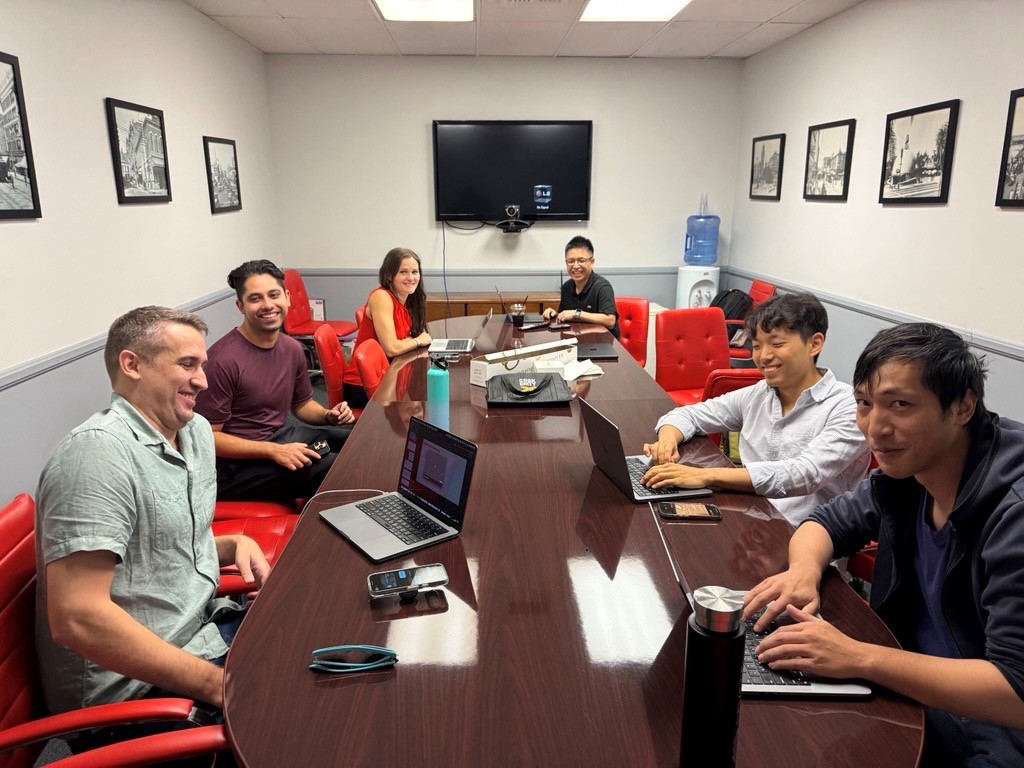
At Interwell Health, innovation is at the heart of transforming kidney care. As part of this innovation, we are harnessing robust patient datasets to build advanced, evidence-based Interwell KidneyAI tools that seamlessly integrate into clinical workflows, tackle real-world challenges, and give clinicians more time to focus on patient care.
Behind the proprietary Interwell KidneyAI suite is a dedicated team of data scientists, engineers, and technologists working to redefine how clinicians deliver care. By combining sophisticated technology with deep clinical expertise, the AI team is building solutions that streamline administrative tasks, close care gaps, and drive meaningful improvements across the patient journey. The ultimate goal: to empower more proactive, personalized, and efficient care that helps preserve kidney function, reduce hospitalizations, and improve outcomes for people living with kidney disease.
The Interwell Health AI team combines startup agility with enterprise rigor
Interwell’s data science and AI team brings together specialists with diverse expertise in technology, digital transformation, and computer science who work together virtually from locations across the U.S. Operating as an agile startup within the framework of a larger organization, the team rapidly develops new solutions while maintaining scientific discipline and rigorous quality standards. This hybrid mindset empowers them to focus on practical, high-impact AI applications across clinical, operational, and technical functions.
“Our approach is distinctive because we focus less on any single technology and more on using the right combination of tools to deliver real value,” says Daniel Min, a senior machine learning engineer in Washington state who started his career in management consulting. “We are willing to experiment with new methods and technology stacks—even those that differ from our traditional approaches—if it improves outcomes for patients or the organization.”
Min and his colleagues are used to working on projects encompassing a mix of statistical, machine learning (ML), engineering, and data architecture problems. “Almost all of the work I’ve done at Interwell could be defined as an opportunity to experiment and innovate,” adds Maribeth Cogan, a senior data scientist who lives in Texas and describes herself as curious and analytical. She says the team operates as “a hardworking yet laid-back family who are there for each other and will rally to solve any issue.”
Pierson Wodarz recently joined Interwell as a senior product manager after starting his career at Epic and then transitioning to data science product management for a regional health plan. “I saw the potential for AI to transform healthcare and wanted to be a part of building those nascent solutions,” says Wodarz. “I came to Interwell because it’s a forward-looking leader in developing new AI solutions to improve patient care. There’s strong support for developing new solutions and real opportunities to rapidly build and deliver tools that can make a measurable difference in patient care.”
Wodarz’s previous experience also showed him the challenges of deploying AI solutions in healthcare. He says Interwell is taking a thoughtful approach to improving operations and patient journeys with novel AI technologies such as speech-to-text, large language models (LLMs) that process and generate human-like text, and retrieval augmented generation (RAG) bots that combine AI with real-time data retrieval. “These technologies are applied conscientiously, with great attention to their limitations and risks,” he notes.
Interwell’s guiding principles for AI innovation
Interwell’s AI philosophy is grounded in a clear set of principles: build where we differentiate, accelerate now to converge later, ensure human oversight at every step, and always focus on impact. These principles guide the team's focus and investment, ensuring resources are spent on creating maximum impact for patients and clinicians.
“AI needs to be actionable for it to provide value,” explains Alex Ruterbories, senior director of machine learning who leads Interwell’s team of data science and ML engineers from his homebase in Colorado. Since he first joined Interwell as a data scientist, Ruterbories says the team’s work has evolved to include building electronic health record (EHR) connections, an internal data lake house, clinician-facing web apps, production-grade solutions powered by in-house ML models, and more. Across all of these advanced solutions, the team takes a results-driven approach, rather than focusing on delivering isolated products.
With his background in computer science and public health, California-based Kunal Mishra joined Cricket Health, now part of Interwell, to drive better health outcomes. In his role as a senior data scientist, he’s motivated to make value-based care more impactful by building solutions that identify high-risk patients and enable care teams to stage timely interventions for those in need of support. “By the time someone has ended up in the hospital, their care team is focused on damage control,” says Mishra. “I care deeply about making healthcare something that isn’t purely reactive. Having the skills and opportunity to make the world a better, healthier, and less expensive place is why I show up to work every day.”
“I’m continually impressed by the skills, raw talent, growth mindset, and values of our team,” adds Mishra. “We care deeply about each other, the team, the company, and our patients. Our projects drive real change and value.”
Turning data into actionable AI solutions for kidney care
One of the team's major projects is a web application that allows Interwell renal care coordinators (RCCs) to view recently discharged patients, read AI-generated risk summaries, and log interactions all in one place. To further improve care team efficiency, the AI team recently rolled out AI-enabled care plans that reduce time on manual documentation and “after call work,” giving clinicians time back to reach more patients.
Another key initiative is the use of ambient listening technology to capture, transcribe, and summarize patient conversations. This innovation not only reduces documentation burdens for clinicians but also ensures seamless care continuity by providing accurate, actionable summaries. “Documentation is one of the biggest drivers of clinician burnout. Ambient listening frees up care teams to focus on patients over paperwork,” explains Ruterbories. “If one of our clinicians has an hour-long conversation with a patient, we can summarize it so someone else can catch up immediately and pick up where they left off.”
While the team is committed to continuous innovation, this forward momentum is coupled with ongoing measurement to evaluate the effectiveness of AI tools. What they have found has been both encouraging and eye-opening. “Interwell has a positive impact on health outcomes, and our data science products allow us to accurately identify the riskiest segments in our population,” says Mishra. “Moving forward, there are opportunities to collaborate with our product and clinical teams to further enhance clinical design and delivery.”
Collaborating to advance AI-driven kidney care
To build solutions that hold up under clinical and operational scrutiny, the data science and AI team partners closely with frontline care professionals and nephrology experts. “Our stakeholders—especially clinicians—go above and beyond to help us understand their workflow nuances and needs,” says Min, whose design mindset is rooted in creating value for internal teams, partners, and patients. “Our partners’ willingness to engage and take thoughtful risks alongside us enables our team to develop AI tools that meaningfully support care and improve patient outcomes.”
Based on his experience integrating data science solutions into end-user workflows, Wodarz echoes this sentiment. “An AI model on its own has no value. Value is realized when it’s used in the real world,” he says. “This requires collaboration with platform teams and clinical operations leadership. Without that collaboration, we could have the best, most accurate, most powerful model in the world, but have no positive impact.”
The future of AI in kidney care: What’s next for Interwell Health
Interwell’s AI team is not just focused on solving today’s healthcare challenges, they’re shaping the future of kidney care. Mishra expects Interwell will continue to leverage ML, data science, and biostatistics in novel ways that allow for more targeted, personalized patient care while also developing new use cases for cutting-edge technologies such as LLMs. “LLMs have already begun to change the world around us,” says Mishra. “The real innovation will come from adopting these technologies responsibly, with rigorous testing, validation, and human oversight at every step. At Interwell, we get to be on the bleeding edge of healthcare innovation.”
Cogan echoes Mishra’s enthusiasm. After more than a decade working across healthcare and technology, she joined Interwell as a data scientist in 2023, drawn by its leadership in advancing AI for healthcare. “Many healthcare companies tend to be slow to adopt new technology or to modernize their systems. This is not the case at Interwell,” says Cogan. “Working here has been an incredible opportunity to collaborate with talented colleagues, grow as an engineer, and make a real difference in people’s lives.”