How can seated exercises help you stay active?
If standing is difficult or you're new to exercise, seated exercises can be a safe and effective way to stay active. Learn simple movements that can support your overall health and well-being.

Staying active supports your overall health and well-being. If standing is difficult or you're new to exercise, seated exercises can be a safe and effective way to get moving. Talk to your care team before starting an exercise program to determine what's right for you.
What are the benefits of exercise?
Regular exercise can help build strength, improve flexibility and balance, boost energy, and support heart and lung health. Staying active may also improve mood, reduce stress, promote better sleep, and help you maintain independence in daily activities.
How do you get started?
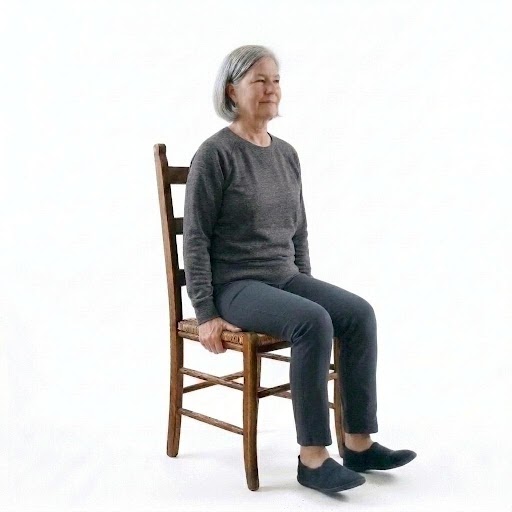
Every movement counts. Even a few minutes of seated exercise can improve overall health. These simple seated exercises can be performed in a sturdy chair that does not have wheels, with your feet flat on the floor. Chairs with or without arms are appropriate.
Seated stretching exercises
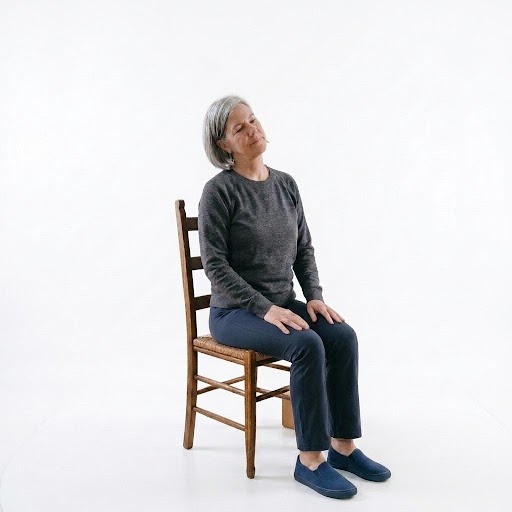
Neck stretch
- Slowly tilt your head to the side, ear toward your shoulder.
- Hold for 10–15 seconds.
- Repeat each side 10 times.
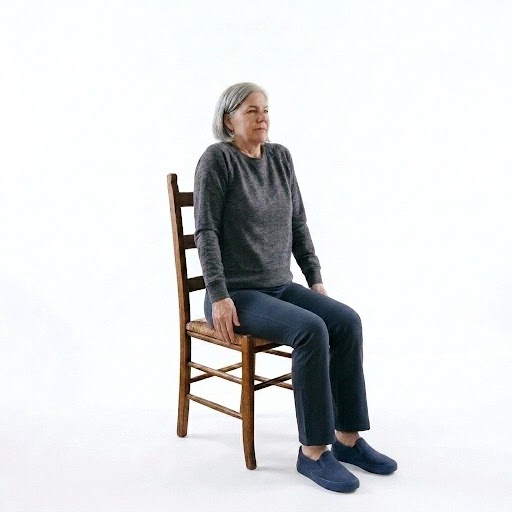
Shoulder rolls
- Lift your shoulders toward your ears.
- Roll your shoulders backward, then drop them down.
- Next, lift your shoulders toward your ears, roll your shoulders forward, and drop them down.
- Repeat 10 times.
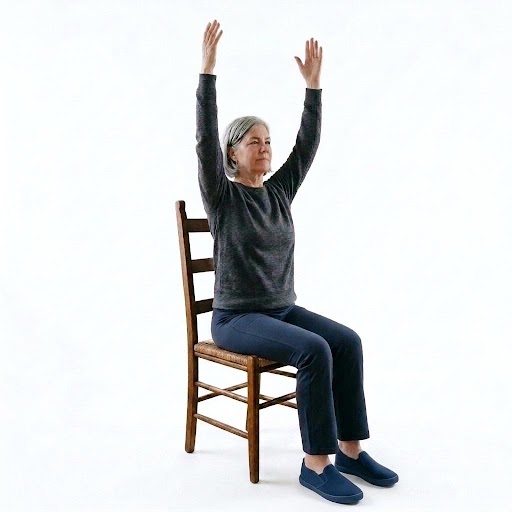
Seated reach
- Raise both arms overhead and gently reach toward the ceiling.
- Hold for 5–10 seconds. Then relax your arms in your lap.
- Repeat 5 times.
Seated strength and cardio exercises
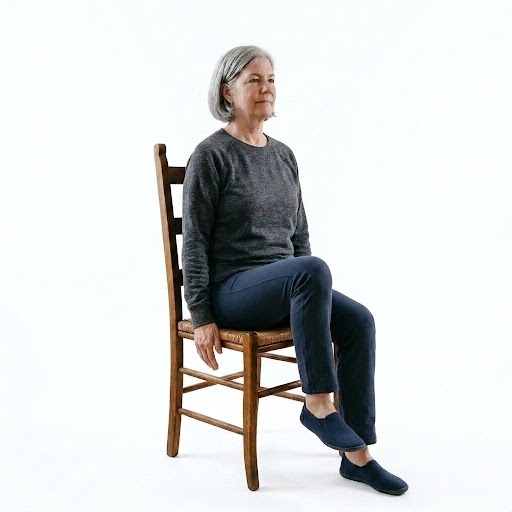
Seated marches
- Lift one knee, raising your foot off the ground if you’re able, then lower it immediately back to the floor.
- Lift your other knee, raising your foot off the ground if able, as if you were marching.
- Continue for 30–60 seconds.
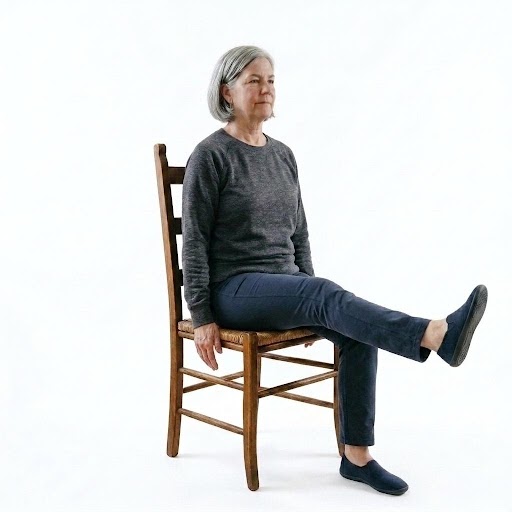
Leg extensions
- Straighten one leg until it is parallel with the floor.
- Try to hold to the count of 5, then lower your leg.
- Repeat 10 times per leg.
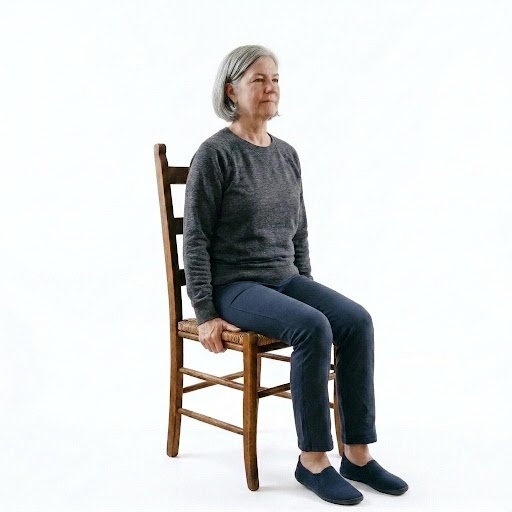
Chair push-ups
- Place your hands on the armrests or sides of the chair.
- Press down through your arms to lift some or all your body weight off the chair.
- Hold for 2–3 seconds and release.
- Repeat 8–10 times.
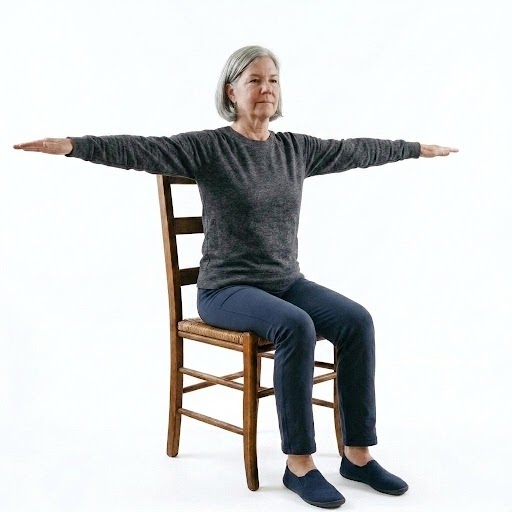
Arm circles
- Extend your arms out to the sides.
- Make small circles in a forward motion for 30 seconds.
- Then make small circles in a backward motion for another 30 seconds.
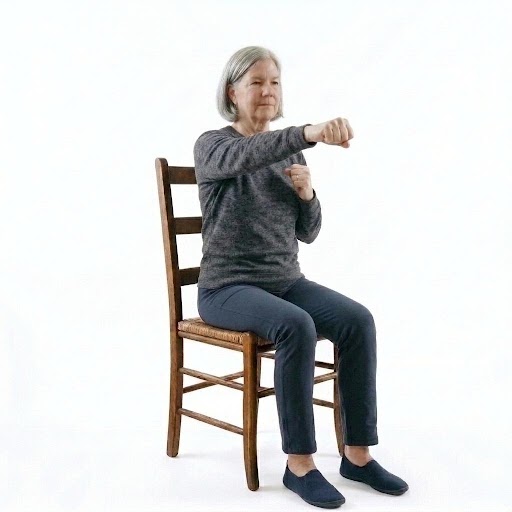
Seated punches
- Raise your fists up to chest level.
- Use one fist at a time to make a punching motion straight out and back to the chest. Rotate arm with each punching motion.
- Continue for 30–60 seconds.
Fast feet
- Tap your feet quickly on the floor. You can leave your heels on the floor tapping your toes if needed or leave the balls of your feet on the floor lifting your heels.
- Continue for 30–60 seconds.
How can you stay motivated?
Building an exercise routine takes time, but these simple tips can help you stay on track:
- Exercise with a friend for extra motivation.
- Set realistic goals and start slowly.
- Aim to move most days of the week.
- Stay hydrated.
- Wear comfortable, supportive clothing.
- Listen to your body and rest when needed.
- Celebrate your progress along the way.
Key takeaways
- Seated exercises are a safe and effective way to stay active, especially if standing is difficult or you are new to exercise.
- Regular movement can help improve strength, flexibility, balance, energy levels, and overall well-being.
- Stretching, strength, and cardio exercises can all be performed while seated using a sturdy chair.
- Starting slowly and staying consistent can help you build a lasting exercise routine.
- Your healthcare team can help you identify exercises that are safe and appropriate for your health needs.
We are here to help
Your care team can help you find more exercises that work for you. Reach out for any support you need.
This serves only as a guide. Talk with your healthcare provider for more information based on your health needs.

Julie Dominguez, MD
Vice President, Medical Office, Interwell Health
Julie Dominguez, MD, is a nephrologist with extensive experience in private practice nephrology and medical education. At Interwell Health, she helps advance high-quality kidney care programs that support patients and clinicians. Dr. Dominguez earned her medical degree from the University of Texas Southwestern Medical Center, completed her Internal Medicine residency at Duke University, and completed her Nephrology fellowship at the University of California San Diego.