Testing Your Blood Sugar with Diabetes
Manage your diabetes by regularly testing your blood sugar to stay in a safe range. Learn how to track your results to stay healthy and take action when needed.
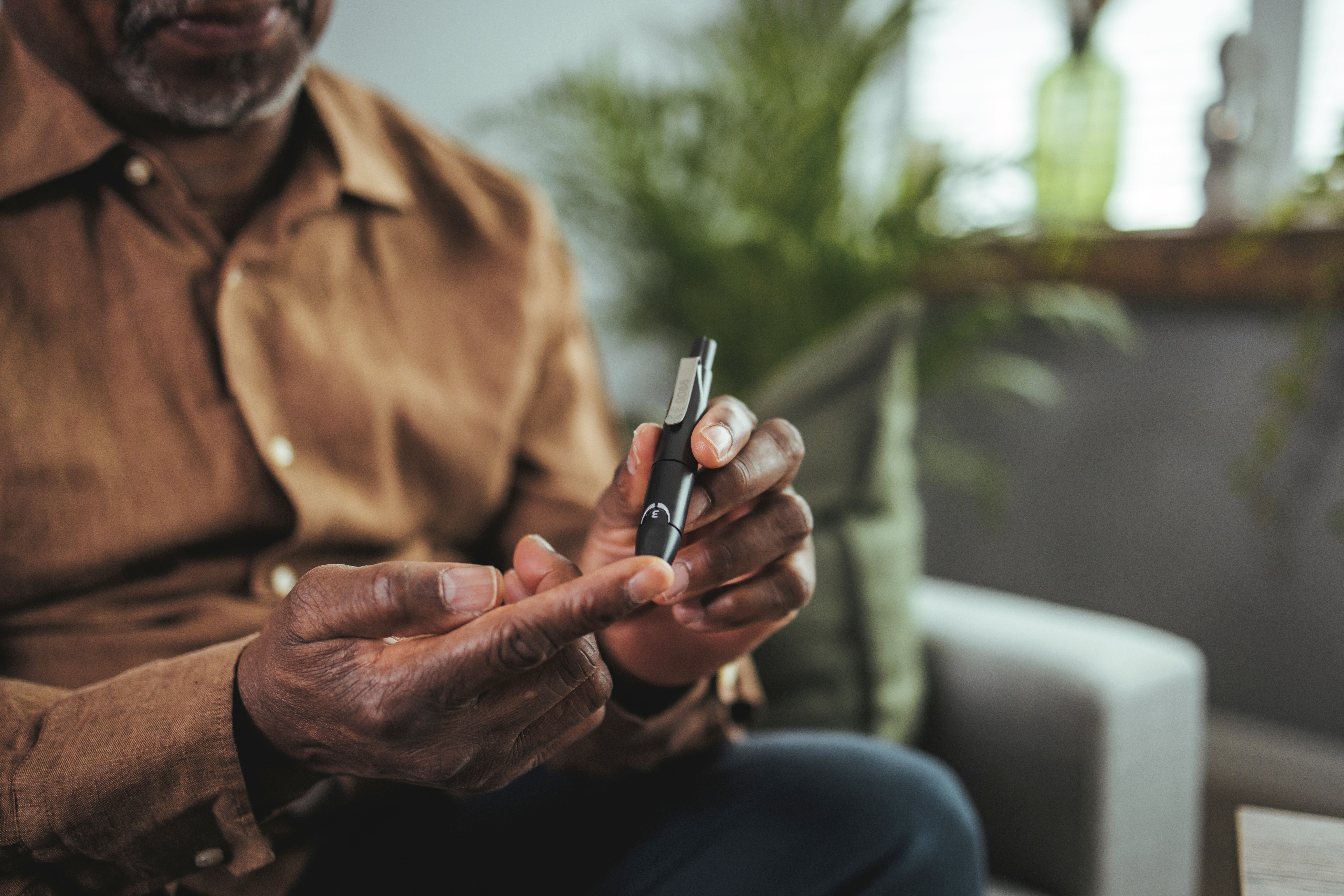
Regularly testing your blood sugar, also called glucose, helps you manage your diabetes and stay healthy. It shows if your blood sugar is in a safe range. Some change is normal, but if your blood sugar gets too high or too low, it can lead to health problems. Testing helps you know when to take action.
How to test your blood sugar
Your blood sugar can change during the day based on what you eat, the medicine you take, and how active you are. If you have diabetes, it's important to check your blood sugar regularly using either a blood glucose meter or a continuous glucose monitor (CGM).
Blood glucose meters
A blood glucose meter is a small device that uses test strips and a small sample of blood to measure glucose. How to use a blood glucose meter:
- Wash your hands, then insert a test strip into the meter.
- Use the small needle, called a lancet, on the fingerstick device to get a drop of blood from the side of your fingertip.
- Touch and hold the edge of the test strip to the drop of blood and wait for the result.
- Your blood glucose level will appear on the meter's display.
Remember, each meter can have slightly different instructions. Check the user's manual or ask your doctors for help.
Continuous glucose monitors (CGMs)
A CGM is a small device you wear on your body that checks your blood sugar all day and night. It has a small sensor on or under your skin, a transmitter that sends data, and a screen (or phone app) that shows your numbers. A CGM shows your levels in real time and can alert you if your blood sugar gets too high or too low.
Keeping track of your results
Keeping track of your blood sugar levels is important because it shows how your body responds to your diabetes management plan. After you check your blood sugar, write down the results and note anything that may have affected it, such as:
- What medications you took, including what type of insulin and how much.
- What you ate
- How physically active you were
- If you felt stressed or ill
Your care team can help you understand what your numbers mean and when you should contact them.
Understanding your target range
Your care team will help you understand the best blood sugar range for you. This is determined using factors like age, symptoms, other health conditions you may have, and how long you’ve had diabetes. The following targets are guidelines to follow:
- Between 80 and 130 milligrams per deciliter (mg/dL) before meals.
- Below 180 mg/dL two hours after meals.
We are here to help
Your Interwell Health Care Team can help answer your questions about testing your blood sugar. Reach out for any support you need.
This serves only as a guide. Talk with your healthcare doctors for more information based on your health needs.